Wet vs dry cat food is one of the most important format decisions for pet food brands before product development. Wet cat food usually offers higher moisture, stronger aroma and a softer eating experience, while dry cat food offers better convenience, lower logistics pressure and broader daily-feeding scalability.
For brands, the choice should not be based only on consumer preference. It should consider nutrition positioning, life stage, palatability, product category, packaging, shelf life, MOQ, production cost and retail channel. Gambol supports cat food brands through cat food and treat and a structured OEM/ODM order process for wet food, dry food, treats and customized pet nutrition projects.
Wet cat food and dry cat food differ mainly in moisture level, texture, processing method, packaging format and feeding occasion. Wet food is usually packed in cans, trays or pouches with high water content, while dry food is processed into kibble with lower moisture and better storage convenience.
The Cornell Feline Health Center notes that canned cat food contains at least 75% moisture, making it a useful dietary water source for cats. Dry cat food usually has much lower moisture, which makes it easier to store and transport, but hydration strategy becomes more important. This is why brands should compare wet and dry formats by feeding benefit, not only by production cost.
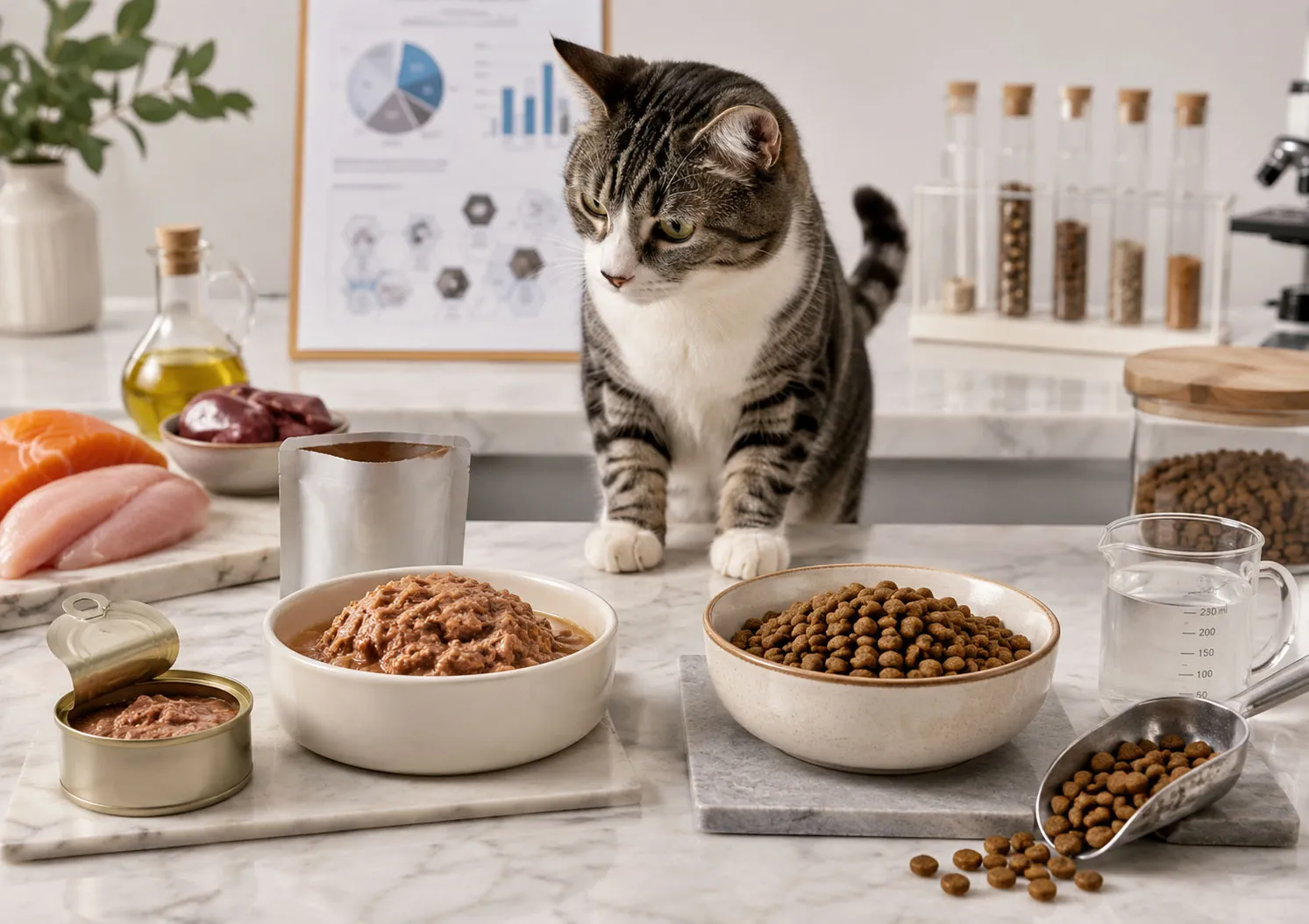
Moisture, nutrient density, palatability and feeding experience determine how owners and cats perceive the product. Wet cat food can support hydration and strong aroma appeal, while dry cat food can offer concentrated nutrition per gram and convenient portion control.
Because wet food contains more water, the same serving weight usually has a lower dry matter concentration than kibble. The Merck Veterinary Manual explains that canned dog and cat foods commonly contain 68%-78% water and 22%-32% dry matter, which affects how brands compare protein, fat and calories between formats.
Palatability also differs. Wet food often provides a stronger aroma, softer texture and easier chewing. Dry food offers crunch, clean feeding, automatic feeder compatibility and easier multi-cat household management.
At a basic category level, wet cat food can include lickable products, pouches and cans, while dry cat food can include baked and extruded formats. Because these categories differ in moisture, texture and intended use, their formulation logic also differs.
For complete daily diets, brands should plan nutritional adequacy early. FDA explains that a valid complete and balanced pet food claim is generally supported by an AAFCO nutrient profile or a feeding trial using AAFCO procedures. This matters for both wet and dry cat food because product format does not replace nutritional validation.
Packaging, shelf life, logistics and production cost affect whether a cat food format is commercially practical at scale. Wet food often needs cans, retort pouches or trays, while dry food usually uses bags, cartons and moisture-resistant packaging.
| Comparison Item | Wet Cat Food | Dry Cat Food |
| Typical Moisture | Often 70%+ | Usually much lower |
| Texture | Soft, gravy, pâté, chunks | Crunchy kibble |
| Palatability | Strong aroma and soft bite | Convenient, clean feeding |
| Packaging | Can, pouch, tray | Bag, box, resealable pack |
| Logistics | Heavier due to water content | Lighter and easier to ship |
| Shelf Life Focus | Sterilization and seal integrity | Moisture control and oxidation |
| Cost Pressure | Higher packaging and transport cost | More efficient for bulk channels |
| Best Channel Fit | Premium, specialty, single‑serve | Mass retail, e‑commerce, daily feeding |
For label preparation, brands should not treat packaging as decoration only. AAFCO’s pet food labeling guide explains how labels address product names, ingredients, descriptive terms, nutrients and feed ingredients, making it useful before artwork and claims are finalized.
Wet and dry cat food should be selected according to life stage, functional need and brand positioning. Kittens, adult cats, senior cats, indoor cats, sensitive-digestion cats and weight-management products may all require different format strategies.
AAFCO's guidance on selecting the right pet food states that products should be formulated for the intended species and provide complete and balanced nutrition for the stated life stage and condition. This makes "kitten," "adult maintenance," "all life stages" and functional claims important decisions before formula development.
Gambol's cat food solutions are designed for global cat market needs, with support for dry food, wet food, treats, freeze-dried products and life-stage product development. On our cat food page, we also highlight compliance‑focused production aligned with standards including BRCGS, FSSC 22000 and GMP.
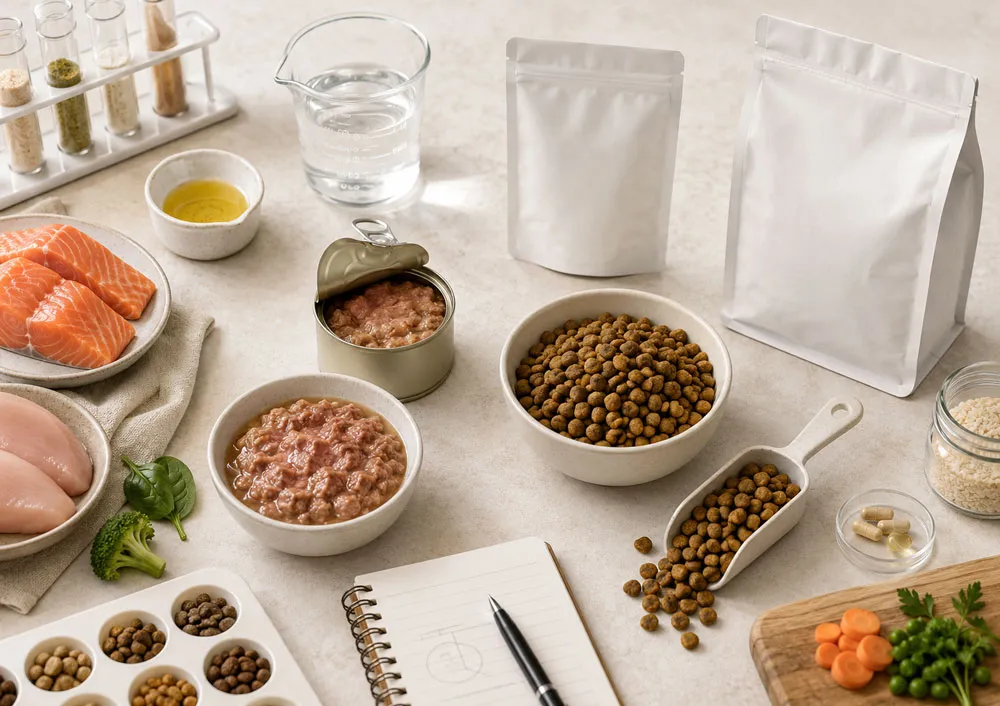
Before choosing wet or dry cat food, brands should ask the manufacturer about formula capability, production process, packaging options, MOQ, quality control, compliance support and supply stability. The right manufacturer should help evaluate format feasibility before sampling begins.
Brands should ask whether the factory can support wet food, dry food or both; what packaging formats are available; how palatability is tested; how raw materials are sourced; what certifications and quality systems are in place; and how long sampling, pilot production and mass production usually take.
Wet and dry cat food formats serve different product strategies. For brands, the best decision depends on target consumers, life stage, nutrition claim, packaging budget, shelf-life expectation, logistics channel and manufacturing capability. Gambol supports cat food brands with wet food, dry food, treats, freeze-dried products, R&D support and OEM/ODM manufacturing services for global pet food markets.
The main difference is moisture and texture. Wet cat food contains much more water and has a soft texture, while dry cat food is low-moisture kibble with better storage convenience.
Moisture affects hydration, texture, nutrient density, packaging weight, shelf stability and shipping cost. Brands should compare products on both as-fed and dry matter basis.
Yes. Many brands use dry food for daily feeding and wet food for premium meals, hydration support or flavor variety, but this requires stronger supply chain and inventory planning.
 SUPERZOO
 Interzoo
 Interpets

Building 10, Eureka Industry Park, Lane 863, Jinhui Road, Huacao Town, Minhang District, Shanghai, China

 English
 日本語
日本語 한국어
한국어 français
 Deutsch
 Español
 italiano
 русский
 português
 العربية
 Türkçe

